How to Manage Boutique Villas Maintenance Issues: Definitive Guide
Preserving the structural and aesthetic integrity of independent residential hospitality assets requires examining a complex intersection of environmental exposure, specialized engineering systems, and proactive asset stewardship. When estate directors, property custodians, and high-end hospitality operators investigate premier residential retreats, they study sophisticated properties where absolute luxury merges seamlessly with rigorous preventative upkeep protocols. Furthermore, these premier residential assets function as intricate lifestyle environments that dictate architectural preservation, mechanical reliability, and long-term asset valuation across diverse geographical landscapes.
Analyzing these specialized accommodation categories demands moving past reactive repair models to explore predictive maintenance scheduling, marine and desert material science, and hyper-localized contractor management. From cliffside modernist compounds facing aggressive marine corrosion to historic wine-country estates requiring delicate masonry upkeep, modern high-end property management presents profound operational and technical challenges. Consequently, approaching estate upkeep solely through emergency handyman interventions introduces severe service friction and asset degradation, demanding rigorous critical analysis from experienced asset directors and estate managers alike.
This reference manual provides an exhaustive structural, historical, and operational framework for analyzing, interpreting, and executing elite property maintenance strategies. The following sections dissect systemic historic evolution, analytical mental models, asset typology maintenance economics, and long-term governance protocols to establish a definitive professional standard for preserving exclusive residential environments.
Understanding “how to manage boutique villas maintenance issues”
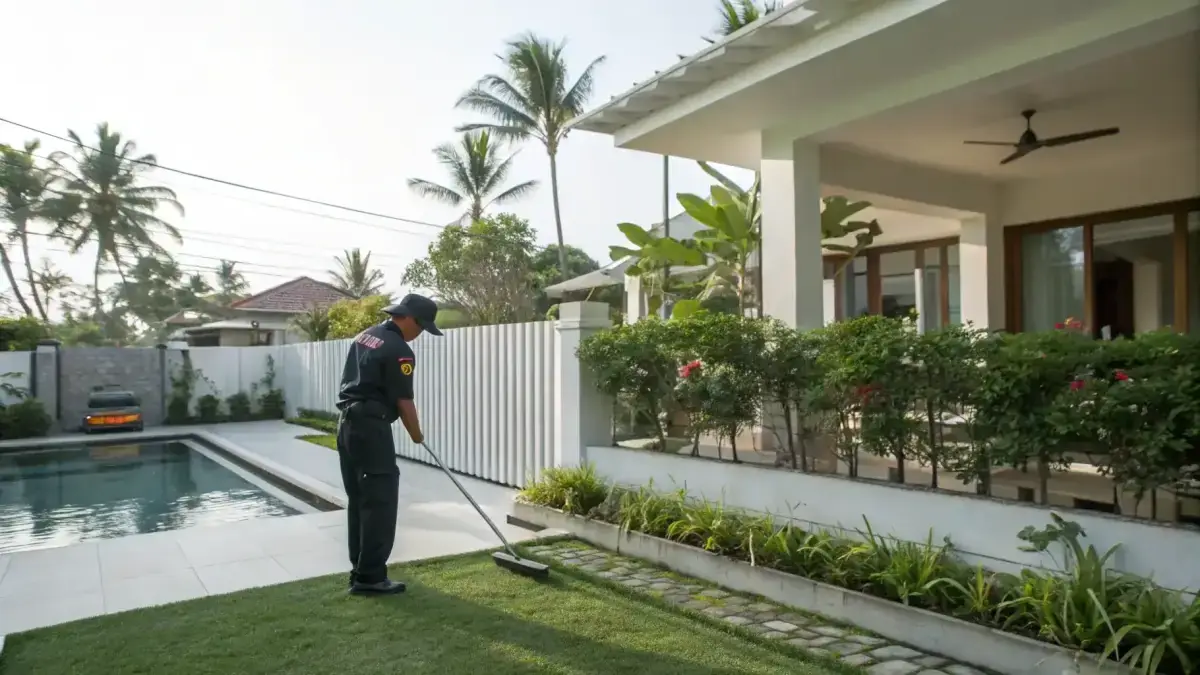
When asset custodians investigate how to manage boutique villas maintenance issues, the primary objective is decoding how environmental stress, architectural complexity, and guest turnover cycles influence both immediate repair workflows and long-term capital preservation. However, a common pitfall involves treating high-end independent properties like standard single-family suburban homes while completely ignoring the intensive mechanical loads, complex automation systems, and zero-tolerance aesthetic standards required in luxury hospitality.
A widespread misconception views estate upkeep through a purely reactive lens, reducing sophisticated building envelopes and integrated building management systems to simple break-fix routines. Consequently, this oversimplification ignores the nuanced micro-climate corrosion rates, specialized parts sourcing delays, and skilled labor shortages that jeopardize high-end operations. In reality, mastering the operational process requires examining the friction between continuous guest occupancy and the strict maintenance windows needed to service heavy infrastructure.
Relying on uncritical maintenance strategies introduces severe financial and experiential vulnerabilities. When operators gloss over routine HVAC servicing, ignore minor moisture intrusion signs, or delay software updates for automated estate controls, small oversights compound into catastrophic system failures. True professional asset stewardship demands rigorous inspection schedules, direct communication with specialized trade contractors, and an honest accounting of how exclusive architectural materials perform under intensive environmental and guest demands.
Deep Contextual Background
The evolution of independent luxury residential upkeep reflects a century-long transformation in building technology and estate management, shifting from basic domestic repair tasks to sophisticated facility engineering protocols. Early luxury properties relied on rudimentary mechanical systems and local handymen, creating structural vulnerabilities that limited long-term asset durability in extreme environments.
The late twentieth century marked a profound architectural and operational turning point. The rise of regional modernist design movements, smart-home automation, and high-performance building materials demonstrated that estate operators could maintain complex residential compounds with unprecedented precision. This shift prioritized proactive asset tracking, energy efficiency, and predictive maintenance schedules that traditional residential models could not replicate.
As luxury tourism and private estate ownership matured, the demand for flawless operational continuity while maintaining absolute architectural grace accelerated the evolution of specialized maintenance frameworks. Consequently, studying and identifying top-tier upkeep strategies transitioned from an ad-hoc administrative chore into a highly rigorous interdisciplinary specialty encompassing materials science, mechanical engineering, hospitality logistics, and asset management strategy.
Conceptual Frameworks and Mental Models
Analyzing complex luxury property maintenance ecosystems requires robust mental models that account for environmental degradation, mechanical wear, and operational prioritization.
The Environmental Stress and Material Degradation Matrix
This foundational model evaluates how local climate factors—such as salt spray, extreme solar radiation, or freeze-thaw cycles—interact with building envelopes. It prevents premature material failure by dictating specific protective coating and sealing intervals.
The Preventive-to-Corrective Maintenance Ratio
Elite properties must minimize emergency repairs through scheduled preventative upkeep. This mental model tracks labor allocation to ensure that proactive servicing outweighs disruptive reactive callouts.
The Infrastructure Redundancy and Failure Impact Axis
Operational workflows must evaluate the downstream consequences of core system breakdowns, such as water filtration or backup power generation. This framework exposes single points of failure before guest arrivals occur.
The Asset Lifecycle and Capital Expenditure Hierarchy
This model stratifies maintenance into daily operational fixes, seasonal deep servicing, and long-term structural capital renewals, ensuring balanced financial planning across multi-year asset horizons.
Key Categories and Variations
Mastering the study of luxury property maintenance involves navigating distinct regional and architectural typologies, each carrying specific technical challenges and repair requirements.
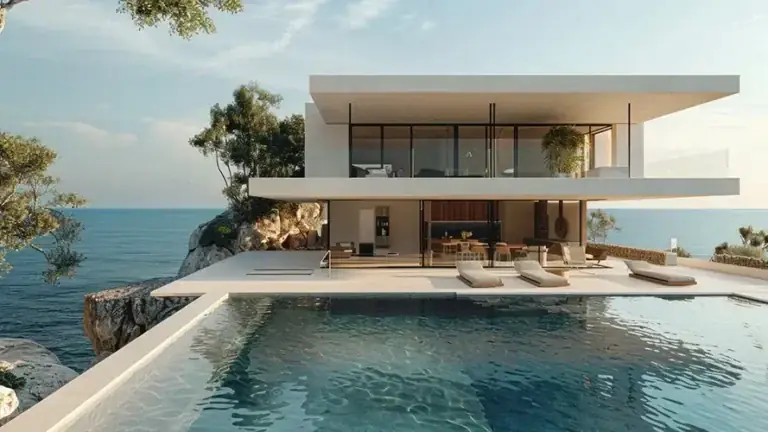
Coastal Modernist and Cliffside Oceanfront Estates
Comprising architectural compounds featuring floor-to-ceiling glass, cantilevered terraces, and direct marine exposure along Pacific and Atlantic shorelines.
-
Trade-Offs: Delivers breathtaking aesthetic value, but requires intensive marine-grade corrosion mitigation for metal fixtures and constant window seal inspections.
Desert Biophilic Sanctuaries and Canyon Retreats
Integrating rammed-earth walls, private plunge pools, and shaded courtyards designed to harmonize with arid Southwestern ecosystems.
-
Trade-Offs: Offers serene isolation, but demands specialized dust-filtration maintenance, HVAC coil cleanings, and stucco surface crack remediation.
Wine-Country Vineyard Compounds and Historic Estates
Sprawling agricultural retreats nestled among working vines, featuring custom outdoor kitchens, wine cellars, and expansive agrarian landscapes.
-
Trade-Offs: Immerses guests in rural culture, but involves seasonal pest management, well-water filtration upkeep, and wood-rot prevention.
Alpine Timber Lodges and Mountain Perches
Multi-level architectural masterpieces featuring massive stone hearths, exposed timber trusses, and direct access to rugged wilderness terrain.
-
Trade-Offs: Provides cozy mountain seclusion, but requires rigorous roof snow-load inspections, ice-dam mitigation, and heavy timber re-staining cycles.
Island Sanctuary Compounds
Secluded coastal properties situated on private or semi-private island domains along coastal archipelagos.
-
Trade-Offs: Unmatched island isolation, but dependent on complex marine freight logistics for replacement parts and specialized technician travel.
Historic Urban Townhouse Compounds
Restored architectural landmarks in cultural hubs providing private inner courtyards and bespoke historical preservation needs.
-
Trade-Offs: Deep cultural access, but strict historical zoning compliance and specialized masonry repair requirements.
Operational Comparison Table
| Property Typology | Primary Architectural Style | Main Maintenance Challenge | Primary Upkeep Strategy | Risk Profile |
| Coastal Modernist | Glass, Steel & Concrete | Salt-air corrosion & seal failure | Frequent wash-downs & marine coatings | Moderate (environmental wear) |
| Desert Biophilic | Rammed Earth & Stone | Dust accumulation & thermal stress | HVAC coil servicing & stucco sealing | Low to Moderate |
| Wine-Country Agrarian | Farmhouse & Modern Barn | Wood rot & well-water scaling | Pest control & filtration servicing | Low |
| Alpine Timber Lodge | Heavy Timber & Stone | Roof ice dams & wood weathering | Snow-load checks & timber sealing | Moderate (weather extremes) |
| Island Sanctuary | Coastal Timber & Glass | Freight delays & marine humidity | Stockpiling critical spare parts | Moderate (supply logistics) |
| Urban Townhouse | Historic Brick & Masonry | Historic zoning & masonry decay | Specialized tuckpointing & care | Low |
Realistic Decision Logic
When property custodians evaluate maintenance strategies, decision logic must prioritize environmental threat profiles and contractor availability above purely aesthetic cosmetic repairs. If an estate manager ignores routine roof drainage clearing in an alpine setting before winter storms arrive, the resultant ice damming will cause severe interior water damage. Managers must weigh the ongoing cost of proactive contractor retainers against the catastrophic expenses of emergency structural remediation.
Detailed Real-World Scenarios
Practical maintenance scenarios illustrate how mastering property upkeep prevents operational failures, financial drain, and guest dissatisfaction across diverse markets.
Case Study A: The Big Sur Coastal Cliffside Retreat
Estate custodians managing a modernist glass property perched above the Pacific Ocean implemented an aggressive marine-grade maintenance schedule to combat aggressive salt-spray corrosion.
-
Constraints: Aggressive marine humidity; high winds; strict environmental runoff regulations protecting coastal flora.
-
Decision Points: Management evaluated whether to rinse exterior steel frames manually with fresh water weekly or apply specialized ceramic clear-coat sealants.
-
Failure Modes Identified: Untreated stainless-steel window hardware exhibited pitting and oxidation within six months of installation.
-
Second-Order Effects: Applying marine ceramic coatings drastically reduced corrosion rates while minimizing chemical runoff into protected soil beds.
-
Resolution: The property maintained pristine architectural metalwork and flawless window clarity throughout the high-occupancy season.
Field Incident B: The Palm Springs Desert Compound HVAC Management
A property team overseeing a mid-century desert compound in Southern California addressed extreme fine-dust accumulation clogging precision climate control condensers during peak summer heat.
-
Constraints: Fine wind-blown desert sand; high ambient temperatures exceeding 115°F; sensitive architectural sightlines.
-
Decision Points: Planners assessed whether to schedule bi-weekly coil power-washing or upgrade to multi-stage cyclonic pre-filters.
-
Failure Modes Identified: Fine desert dust insulated condenser coils, causing compressor overheating and sudden system shutdowns.
-
Second-Order Effects: Unregulated indoor temperature spikes risked severe guest discomfort and emergency HVAC repair premiums.
-
Resolution: Multi-stage pre-filters combined with automated misting rinse cycles stabilized compressor temperatures and extended equipment lifespan.
Operational Deployment C: The Napa Valley Vineyard Estate Water Filtration
Operators managing a rural wine-country estate in Northern California modernized their private well-water filtration and ultraviolet sterilization systems to prevent mineral scaling and biological fouling.
-
Constraints: Hard well water with high iron and mineral content; lack of municipal water backup; high guest water consumption.
-
Decision Points: Designers compared replacing ion-exchange resin tanks monthly versus installing an automated duplex water softening system with integrated UV disinfection.
-
Failure Modes Identified: Mineral scale clogged high-end plumbing fixtures and stained luxury bathroom stone surfaces.
-
Second-Order Effects: Unsightly mineral deposits detracted from the ultra-luxury aesthetic and damaged high-end brass fixtures.
-
Resolution: Installing the automated duplex softening system eliminated mineral scaling entirely and protected plumbing infrastructure.
Operational Deployment D: The Aspen Alpine Timber Lodge Roof Mitigation
A facility team maintaining a multi-level mountain timber lodge in Colorado executed a comprehensive pre-winter snow-guard and heat-cable inspection protocol.
-
Constraints: Heavy alpine snow loads; freezing temperatures; steep architectural roof pitches.
-
Decision Points: Management evaluated whether to clear snow manually after every major storm or install automated roof heat-trace cables and structural snow fences.
-
Failure Modes Identified: Uncontrolled roof avalanches damaged custom landscaping and endangered pedestrian walkways below.
-
Second-Order Effects: Potential liability risks and blocked secondary emergency exit doors during severe winter storms.
-
Resolution: Permanent snow fences and zoned self-regulating heat cables prevented dangerous ice accumulation and ensured safe winter guest transit.
Planning, Cost, and Resource Dynamics
Administering an effective property maintenance program requires understanding the economic relationship between preventative budgeting, contractor retainers, and capital reserves.
Direct and Indirect Financial Realities
When analyzing high-end maintenance expenditures, operators must weigh routine service contract costs against emergency repair tariffs and replacement lead times. Failing to budget for specialized replacement parts or remote technician callout fees creates fragile financial models that collapse when critical systems fail.
Opportunity Cost and Resource Allocation
Estate directors must balance hands-on oversight hours against broader asset management responsibilities. Over-allocating time to minor cosmetic touch-ups results in administrative fatigue, while ignoring major mechanical lifecycles drains financial reserves rapidly.
Financial and Resource Allocation Range Table
| Maintenance Phase | Typical Time Investment | Resource Requirement | Financial Impact | Economic Return |
| Preventive System Audits | 10 – 15 Hours / Month | Specialized diagnostic tools | Prevents catastrophic failures | High (long-term savings) |
| Contractor & Vendor Management | 8 – 12 Hours / Month | Vetted local trade networks | Ensures rapid response times | Critical for operations |
| Inventory & Parts Stockpiling | 4 – 6 Hours / Month | Dedicated secure storage room | Eliminates shipping lead times | Moderate to High |
| Capital Reserve Planning | 6 – 10 Hours / Quarter | Financial forecasting software | Secures long-term asset value | Essential for asset health |
Tools, Strategies, and Support Systems
Executing precise maintenance oversight for luxury properties requires specialized digital tools, inventory tracking systems, and trade support frameworks.
1. Computerized Maintenance Management Systems (CMMS)
Leveraging digital work-order software to automate preventive maintenance schedules, track equipment histories, and log vendor service reports.
2. Specialized Diagnostic Thermal Imaging Cameras
Deploying infrared thermography to detect hidden moisture intrusion behind luxury finishes, electrical hot spots in distribution panels, and HVAC duct leaks.
3. Vetted Local Trade and Specialty Contractor Networks
Maintaining active retainer agreements with elite electricians, marine engineers, and fine woodworkers who understand high-end luxury tolerances.
4. Critical Spare Parts Inventory Reserves
Stockpiling proprietary architectural hardware, custom light fixtures, filtration cartridges, and specialized pump seals on-site to bypass shipping delays.
5. Smart Building Automation and Remote Sensor Arrays
Integrating IoT-enabled water leak detectors, humidity monitors, and smart thermostats to alert management before minor anomalies escalate.
6. Comprehensive Property Maintenance Manuals
Curating detailed as-built architectural drawings, equipment serial numbers, and manufacturer maintenance guidelines into an accessible digital vault.
Risk Landscape and Failure Modes
Failing to properly structure luxury property maintenance exposes operators to compounding structural, financial, and operational risks.
Catastrophic Water Intrusion and Mold Proliferation
Neglecting routine roof flashing inspections or window seal maintenance leads to hidden water damage and toxic mold growth within expensive wall cavities.
Sudden Mechanical Grid Collapse During Guest Stays
Relying on aging HVAC compressors or backup generators without load-bank testing results in sudden climate control failures during high-profile guest occupancies.
Vendor Unavailability and Extended Downtime
Failing to secure formal service-level agreements with specialized contractors results in extended repair delays when remote estates experience equipment breakdowns.
Governance, Maintenance, and Long-Term Adaptation
Administering long-term quality control over luxury property upkeep requires disciplined seasonal reviews, vendor audits, and systematic tracking checklists.
-
Seasonal Preventative Maintenance Audits: Reconcile all HVAC, plumbing, and electrical service logs directly with lead facility engineers prior to high-occupancy seasons.
-
Vendor Performance and Compliance Reviews: Evaluate trade contractor response times, work quality, and safety compliance annually.
-
Layered Maintenance Checklist:
-
Verify operation of backup generators, automatic transfer switches, and emergency fuel supplies monthly.
-
Inspect building envelope seals, window gaskets, and exterior drainage paths bi-annually.
-
Test smart leak detection sensors, smoke alarms, and security access gates quarterly.
-
Review capital replacement reserves and depreciation schedules annually with asset owners.
-
Measurement, Tracking, and Evaluation
Assessing the ongoing success and operational efficiency of a luxury property maintenance program involves monitoring both qualitative and quantitative indicators.
Leading and Lagging Indicators
Leading indicators include preventive maintenance completion rates, response times of retained contractors, equipment calibration frequency, and inventory stock accuracy. Conversely, lagging indicators reflect maintenance breakdowns, including emergency repair frequencies, guest complaints regarding facility comfort, unexpected component replacements, and escalating operational variance.
Common Misconceptions and Oversimplifications
1. Luxury properties require less maintenance because of their high-end construction quality.
Premium architectural finishes and complex integrated systems actually demand more rigorous, specialized maintenance than standard residential construction.
2. Routine maintenance can be handled reactively when something eventually breaks down.
Waiting for equipment failures in a luxury property guarantees disrupted guest experiences, emergency repair premiums, and severe aesthetic damage.
3. Standard residential contractors are fully equipped to service boutique luxury estates.
Luxury assets require specialized craftspeople familiar with imported stone, custom automation, and high-tolerance marine or desert engineering.
4. Preventive maintenance schedules are rigid and unadaptable to guest booking calendars.
Effective upkeep programs require dynamic scheduling around occupancy gaps, ensuring zero noise or disruption during active guest stays.
5. Smart-home automation systems eliminate the need for manual physical inspections.
Automated sensors supplement monitoring, but physical sensory inspections by experienced engineers remain essential for catching subtle structural anomalies.
6. Keeping spare parts inventory on-site is an unnecessary capital expense.
Maintaining critical proprietary spare parts is a core operational necessity that prevents multi-week shipping delays during emergency repairs.
Ethical, Practical, and Contextual Considerations
Mastering the implementation of elite property maintenance extends beyond mechanical repairs into responsible environmental stewardship, energy efficiency optimization, and sustainable waste reduction. Estate operators carry a profound ethical obligation to utilize eco-friendly cleaning solvents, minimize water consumption through advanced recycling systems, and respect fragile surrounding ecosystems. By integrating advanced engineering diagnostics, proactive trade management, and respectful environmental stewardship, operators ensure their luxury properties honor long-term asset value while delivering flawless, reliable hospitality experiences.
Conclusion
Mastering the structural, mechanical, and operational principles required to successfully execute property upkeep and manage boutique villas maintenance issues is essential for achieving long-term asset preservation and guest satisfaction. Relying on reactive repair models, unverified general contractors, and ignored environmental wear guarantees financial drain, mechanical breakdown, and compromised luxury standards. By investing in computerized maintenance management systems, preventive engineering protocols, critical spare parts reserves, and disciplined seasonal audits, operators secure a resilient, highly rewarding management strategy. Ultimately, rigorous asset stewardship transforms complex luxury environments into enduring, immaculate hospitality realities.